
Most events are still measured backwards. The day goes well, the room looks full, the feedback is positive, and everyone agrees it was a success. But was it? And more importantly, was it the right kind of success? After more than a decade of delivering corporate events, we have found that the difference between an event that runs well and an event that genuinely achieves something is almost always decided before the planning even starts.
Why most events are judged on the wrong things
Attendance figures, satisfaction surveys and production values are the metrics that tend to dominate post-event reporting. They are easy to gather and easy to present. But they measure what happened, not what changed. A full room does not mean people connected with the message. A smooth-running day does not mean the audience left with greater confidence, clarity or commitment.
The problem with measuring success purely on outputs is that it gradually shifts the focus of event planning away from purpose and towards performance. You end up optimising for a well-run experience rather than a meaningful one. And those are not always the same thing.
We see this most often when briefs arrive focused almost entirely on logistics. The venue has been chosen, the date is set, the agenda has been outlined. But ask what the event needs to change or achieve in the people attending it, and the answer is often vague. That is where the real work begins.
What genuine event success looks like in practice
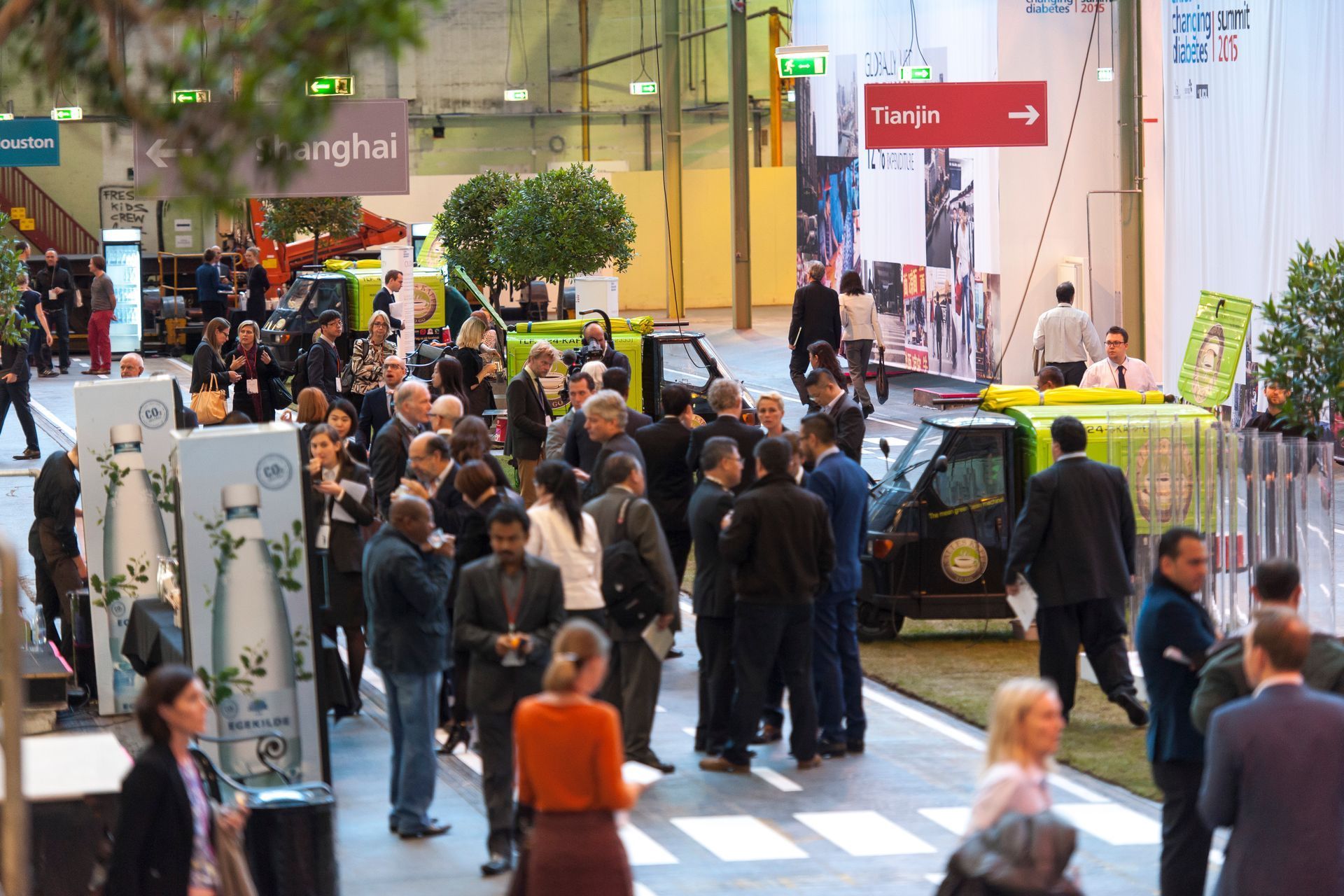
When we were appointed to deliver the Global Diabetes Forum in Copenhagen, the brief was not simply to manage an international conference. Our client, a leading healthcare organisation, needed to bring together healthcare professionals, government representatives, urban planners and architects from across the globe and create something that would generate new frameworks for collaboration between industry, healthcare and public policy.
The outcome they were looking for was not a well-attended event. It was genuine intellectual progress. New partnerships. Shared strategies. The kind of thinking that could only emerge when the right people were put in the right environment and given the conditions to connect properly.
That objective shaped every decision we made. We chose Lokomotivvaerkstedet, a 19th-century locomotive plant in Copenhagen, because the industrial space represented transformation and ingenuity. The layout was built around roundtables and workshops rather than a traditional stage-and-screen format, because the outcome required every delegate to participate, not simply observe. Soundscapes, green spaces and a central connecting avenue were designed to encourage informal conversation between sessions, because we knew that some of the most important exchanges at a forum like this happen away from the scheduled agenda.
The client's senior management described it as one of the best events their organisation had ever delivered. That does not happen by accident. It happens when success is clearly defined before a single supplier is appointed.
How defining success changes every planning decision
When we worked with a global manufacturing business on their vision and strategy launch, we were brought in while the company's five-year growth plan was still being developed. We sat with the executive leadership team as the strategy evolved, which meant that by the time we were designing the launch event for 300 senior leaders across seven UK sites, we understood exactly what the organisation needed people to think, feel and commit to when they left the room.
That clarity changed everything. The event theme, the internal communications plan rolled out across all seven sites in the months beforehand, the speaker coaching we provided for the client's own presenters, the team-building programme for 250 attendees, and the keynote speaker we sourced were all chosen because they served a single defined outcome: genuine belief in the strategy, not just awareness of it.
Without that definition, you end up with a well-produced day that people remember fondly but act on vaguely. With it, every element of the event is working towards the same thing.

Why this matters more than ever for event ROI
Organisations are under more pressure than ever to justify event investment. Boards want to understand not just what an event costs, but what it delivered. In that environment, defining success properly at the start is not just good planning practice, it’s how you build the business case before the event happens, and how you demonstrate value after it.
In exhibition environments, this is particularly clear. When we managed the pharmaceutical congress for a global healthcare client, success was never going to be measured purely by stand footfall. The client needed meaningful engagement with 230 delegates from across the globe, including healthcare professionals and key opinion leaders. That required a fundamentally different approach to stand design, delegate journey and meeting structure than a standard exhibition presence would demand.
The 300-square-metre stand, the custom-built injection pen centrepiece, the coordination of a company symposia and two further scientific meetings alongside the congress programme were all in service of a defined commercial and scientific objective. Footfall was a by-product. Quality engagement was the goal.
Questions to start any project with - because they consistently reveal more about the objectives of the event
We ask these questions at the start of every project, because they consistently reveal more than the brief itself does:
- What should people think differently about after this event?
- What conversations need to happen as a result of this event that are not happening now?
- What does success look like six weeks after the event, not six minutes after?
- If a delegate remembers one thing from this experience, what should it be?
- How will we know it worked?
These questions change the nature of the event. And a better understanding leads to a better event, every time.
Events earn their place when success is defined at the start
A well-run event and a successful event are not always the same thing. The ones that genuinely earn their place in the budget are the ones where the intended outcome was clear before the planning began, and every decision made along the way was tested against it.
That is the standard we hold ourselves to at Activate. And it is the standard we think every event deserves.
Frequently Asked Questions
How do you measure the success of a corporate event?
The most meaningful way to measure corporate event success is to define your outcomes before planning begins. Rather than relying on attendance figures or satisfaction surveys alone, look at whether the event achieved the shift it was designed to create, whether that is stronger alignment, increased confidence, behaviour change or commercial engagement. Metrics set before the event create a genuine benchmark. Metrics chosen afterwards are rarely more than justification.
What is a good event ROI?
Event ROI depends entirely on what the event was designed to achieve. For internal events such as leadership conferences or strategy launches, ROI is typically measured in terms of alignment, engagement and behaviour change rather than direct revenue. For external events such as exhibitions or pharmaceutical congresses, ROI may be tied to qualified conversations, commercial outcomes and delegate engagement quality. In both cases the starting point is a clear definition of success, which makes it possible to evaluate return against a meaningful benchmark rather than a general impression.
When should event objectives be set?
Event objectives should be set at the very beginning of the planning process, before venues are confirmed, agendas are built or suppliers are appointed. The clearer the objectives at the outset, the more purposefully every subsequent decision can be made. Objectives set late in the process tend to be built around what was already planned, which limits their usefulness as a genuine measure of success.