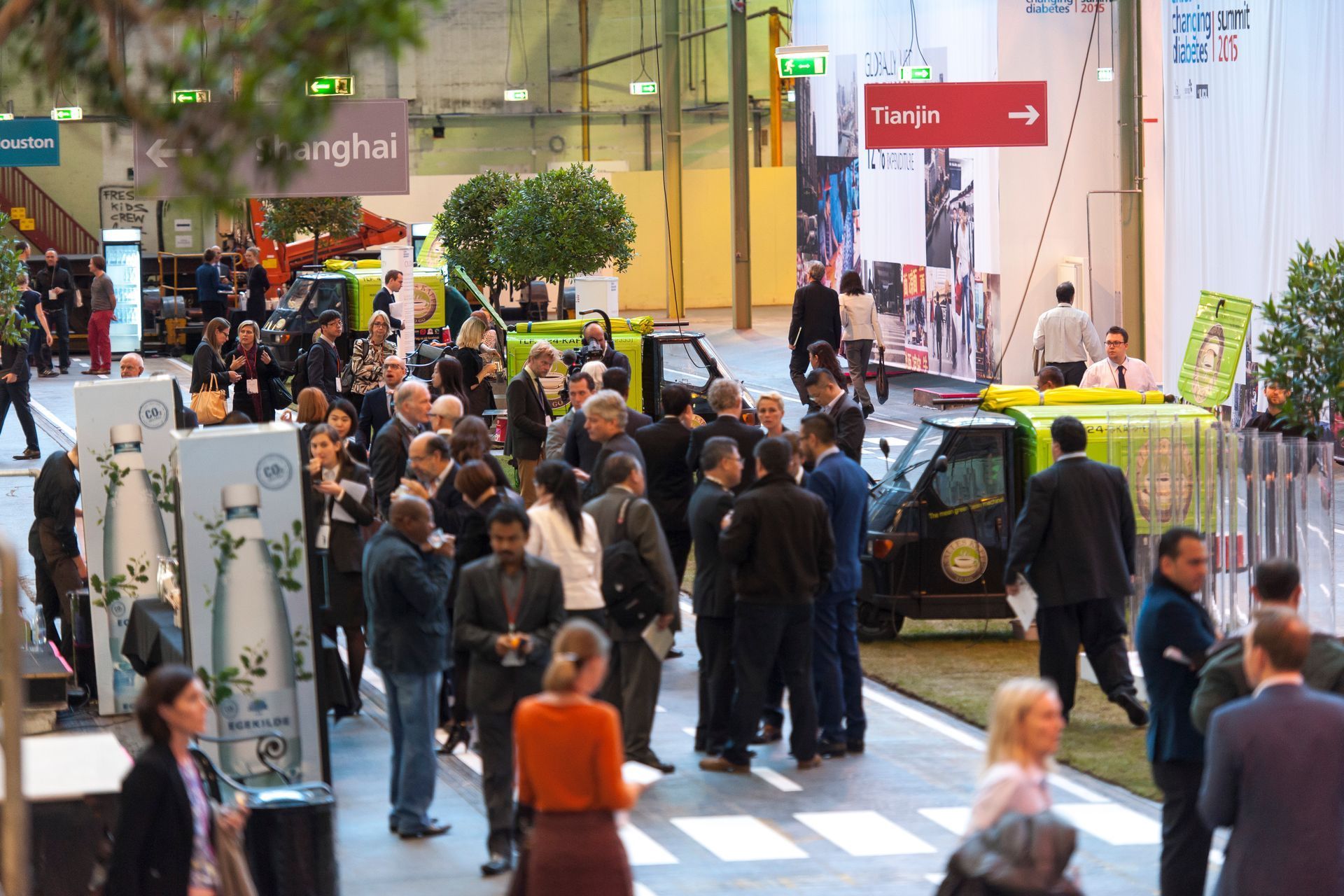

From the outside, a well delivered event often appears effortless, as though everything has unfolded exactly as intended, with each moment landing at precisely the right time.
Sessions run smoothly, transitions feel natural, and speakers move confidently from one segment to the next without hesitation. To the audience, it can feel calm, controlled and entirely seamless, which is, of course, exactly the point.
What remains largely invisible is everything happening behind the scenes to make that experience possible.
Every live event carries a degree of unpredictability that cannot be fully designed away. Timings shift, technology behaves differently under pressure, speakers adapt their delivery in the moment, and audiences respond in ways that are not always easy to anticipate.
Managing that complexity is not simply a matter of process. It is where experience, judgement and coordination come into play.
At Activate, we tend to think of live delivery not as a checklist to be followed, but as a discipline that relies on constant awareness, clear communication and the ability to make informed decisions as situations evolve.
The reality of live environments
No matter how detailed the planning, no event unfolds exactly as it was first imagined, and in many ways, that is what makes live experiences so powerful.
When people, technology and environment come together in real time, there will always be variables that sit outside of complete control. A session may run longer than expected because the discussion is adding value. A speaker may shift tone based on audience reaction. Energy in the room may change unexpectedly.
These are not problems in themselves. They are part of the reality of live environments.
The difference between an average event and an exceptional one lies in how those moments are handled, not whether they occur.
Rather than reacting only when something goes wrong, experienced teams spend time thinking about where friction might arise and how it can be managed before it becomes visible to the audience.
Preparation that goes beyond planning
Strong delivery begins long before the event itself, although it is not simply about building a detailed agenda or running through rehearsals.
Preparation, when done well, is about understanding possibilities rather than trying to fix outcomes in place.
What happens if a session generates more discussion than expected? How should the team respond if energy drops mid afternoon? What is the best course of action if timings begin to shift across the day?
By exploring these scenarios in advance, teams are able to respond with confidence when the unexpected inevitably occurs.
This kind of preparation also creates the conditions for flexibility, which is something we explored in more detail when looking at how events balance structure and spontaneity. When the foundations are strong, it becomes much easier to adapt without losing control of the overall experience.
Communication under pressure
As an event moves into live delivery, communication becomes one of the most critical elements holding everything together.
Production teams, project managers, technical specialists and client stakeholders are all working simultaneously, often making small but important decisions that influence how the event unfolds. Information needs to move quickly, but also clearly, particularly when timing or content needs to be adjusted.
What distinguishes effective teams is not just the speed of communication, but the tone of it.
From our experience, calm and consistent communication creates stability, even when the environment becomes more complex. It allows decisions to be made with clarity rather than urgency, and it ensures that adjustments feel controlled rather than reactive.
That sense of control is not just internal. It is something the audience feels, even if they are not aware of why.

Judgement in the moment
Live events demand constant decision making, although the nature of those decisions is not always dramatic.
Some are small, such as adjusting timings slightly or reshaping a transition. Others carry more weight, involving changes to content flow or how a session is facilitated.
The challenge is not simply to act quickly, but to act appropriately.
Knowing when to intervene and when to allow something to develop naturally requires experience, as well as a clear understanding of what the event is trying to achieve. If a discussion is building momentum and creating value, there may be a case for letting it continue, even if that means adjusting what follows. If energy is beginning to drop, a change in pace or format may be needed.
This is where delivery becomes less about execution and more about interpretation.
It also connects closely to how audiences engage in the room, something we explored further in our thinking around the
psychology of participation. When teams understand how engagement builds and shifts, they are better equipped to respond in ways that support it rather than disrupt it.
Creating a sense of control
For delegates, the perception of control is just as important as the reality behind it.
When an event feels well managed, people relax into the experience. They focus on the content, the conversations and the connections being made, rather than noticing the mechanics that sit behind it.
This does not mean everything runs exactly to plan. In many cases, some of the most effective events include moments of adaptation and flexibility.
What matters is that those moments feel intentional.
At Activate, we focus on creating environments where adjustments can be made without interrupting the overall flow, allowing the experience to remain both dynamic and coherent at the same time.
When everything comes together
When preparation, communication and judgement align, something quite subtle but important happens.
What could have felt disjointed begins to feel connected. What might have appeared chaotic becomes coordinated. The event moves with a sense of rhythm that feels natural, even though it is supported by continuous decision making behind the scenes.
This is what real time event mastery looks like in practice.
It is not about removing complexity, because complexity is inevitable in live environments. It is about managing it in a way that allows the audience to experience something that feels effortless.
Where this matters most
Live events will always carry a level of unpredictability, and in many ways, that unpredictability is what gives them their energy and relevance.
The role of an experienced event team is not to eliminate that uncertainty, but to work with it thoughtfully, shaping it in a way that supports the overall experience rather than detracting from it.
At Activate, we see this as a defining part of what we do, not just planning events, but delivering them in a way that feels composed, responsive and considered from start to finish.
Because when complexity is handled well, it does not feel complex at all. It feels like everything is unfolding exactly as it should.